A facade in Bauhaus style
Pure geometry, white walls and one strong colour — functionalism without ornament.
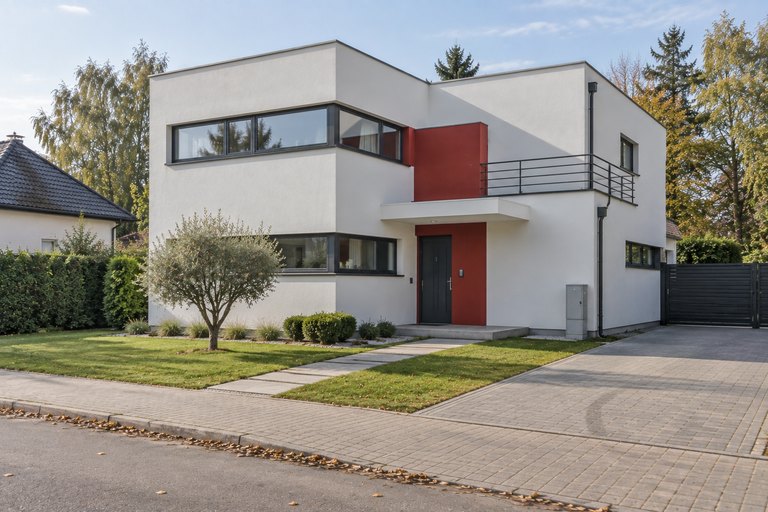
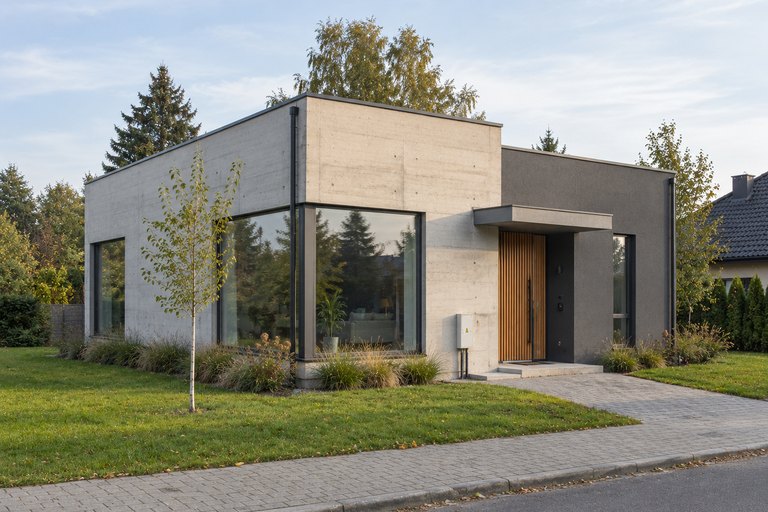
Bauhaus is a style stripped of decoration on principle. The massing is what counts: rectangular volumes, a flat roof, horizontal ribbon windows and a complete absence of cornices or surrounds. The facade is smooth, usually white or very pale, and the only accent tends to be a single plane in a strong colour — red, yellow or deep blue.
That apparent simplicity is demanding. With no detail to distract the eye, everything depends on the proportions of the openings and the quality of the render. Every unevenness and every crooked edge will show.
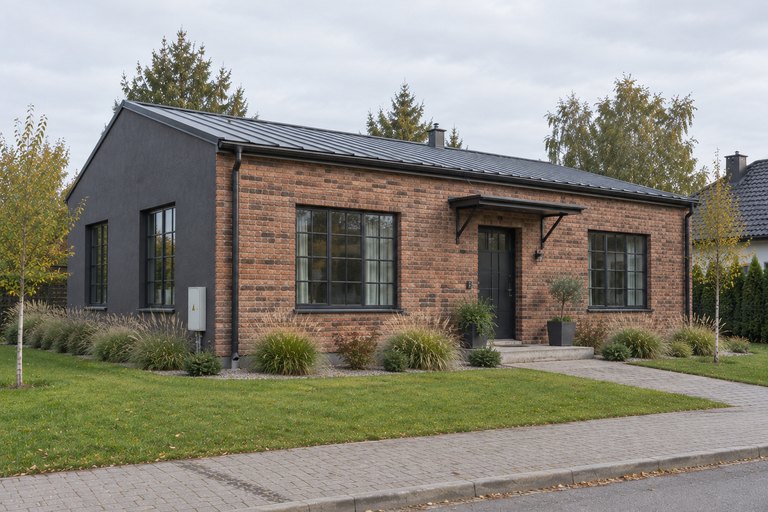
Bauhaus looks best on houses with a flat roof and clearly drawn volumes. On a building with a pitched roof you can still catch its spirit through uniform white, horizontal divisions and the refusal of ornament — and the quickest way to check is a visualisation of your own house.
Which houses it suits
- Houses with a flat roof and clear geometry
- Buildings with horizontal ribbon windows
- Owners who value clean, uncompromising simplicity
Colours and materials
- White and very pale greys
- Black joinery and railings
- One strong accent: red, yellow or deep blue
Common questions
Is Bauhaus the same as the modern style?
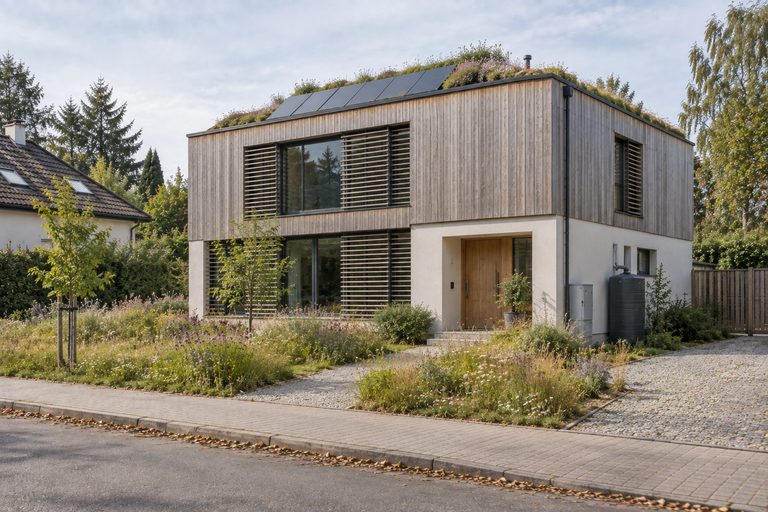
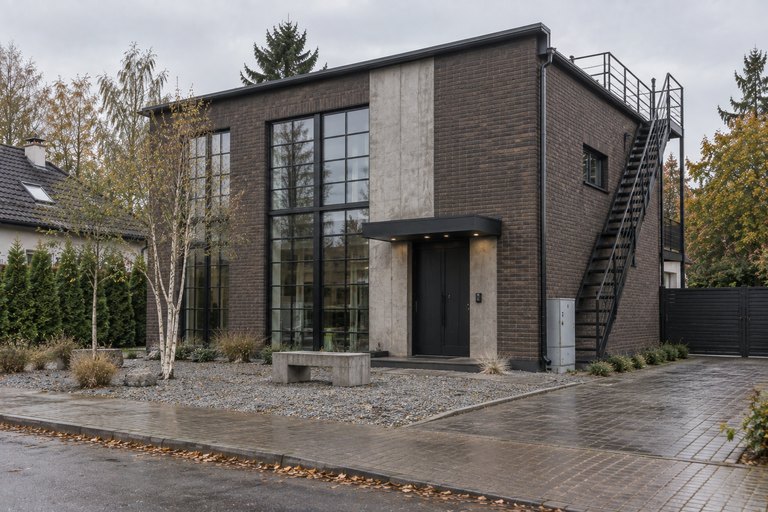
They are related, but Bauhaus is stricter: no ornament, emphatic geometry and often a single colour accent. The modern style allows more materials, such as timber or architectural concrete.
Is a smooth white facade practical?
It needs good render and careful drainage from the roof — without eaves, staining is the usual problem. A slightly broken white is worth considering, as it shows dirt less.
Similar styles