A facade in rustic style
Stone, rough render and aged timber — a facade that looks lived in.
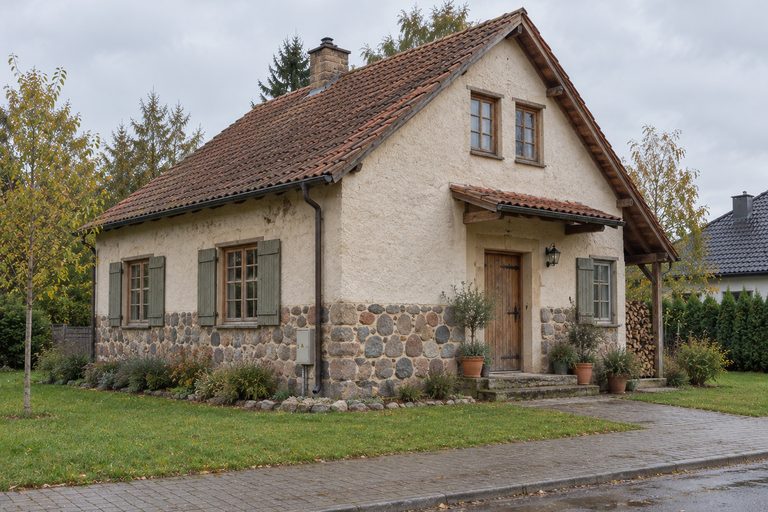
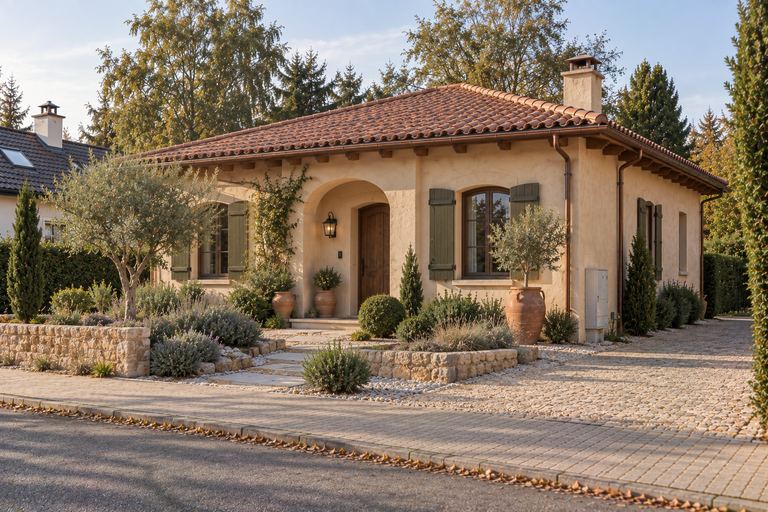
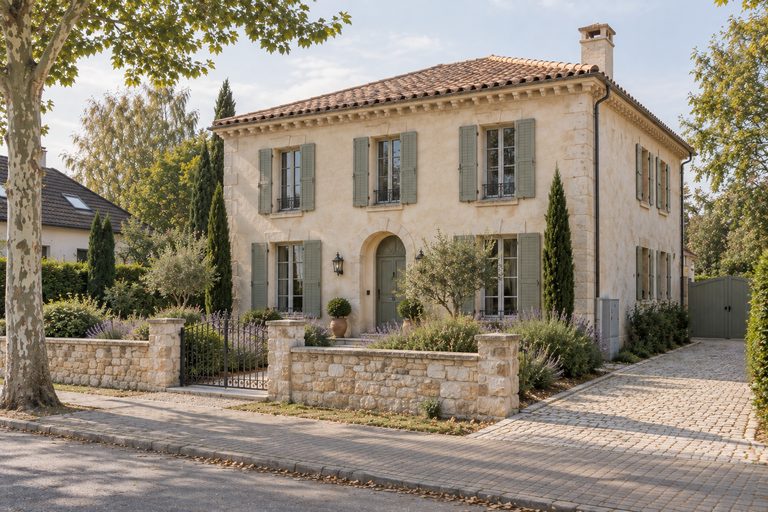
The rustic style is about natural, honestly worn materials: fieldstone or stone-effect cladding on the plinth and around the entrance, rough cream or sand render above, and timber joinery that has gone grey-brown with age.
It works through texture rather than colour. The palette stays close to the ground — creams, greys, warm browns — while the interest comes from the stone bond, the mortar joints and the grain of the wood. Nothing here should look freshly unwrapped.
It suits houses with a steep roof and a compact form, particularly outside the city, and it is a common way to soften a plain 1990s box. On a visualisation you can see how much stone the facade takes before it starts to look like a pastiche — usually less than people expect.
Which houses it suits
- Houses with a steep gable roof
- Plots outside the city, near woodland or fields
- Buildings with an existing stone plinth or chimney
Colours and materials
- Cream and sand render
- Natural stone in grey and brown
- Aged, silver-brown timber
Common questions
Do I need real stone?
No. Good stone-effect cladding is indistinguishable at a few metres and weighs a fraction as much. A visualisation shows how much of the wall is worth covering.
Does the rustic style suit a modern house?
In moderation — a stone plinth and timber accents warm up a simple volume without turning it into a cottage.
Similar styles