A facade in classical style
Symmetry, muted beiges and refined detail — elegance that does not age.
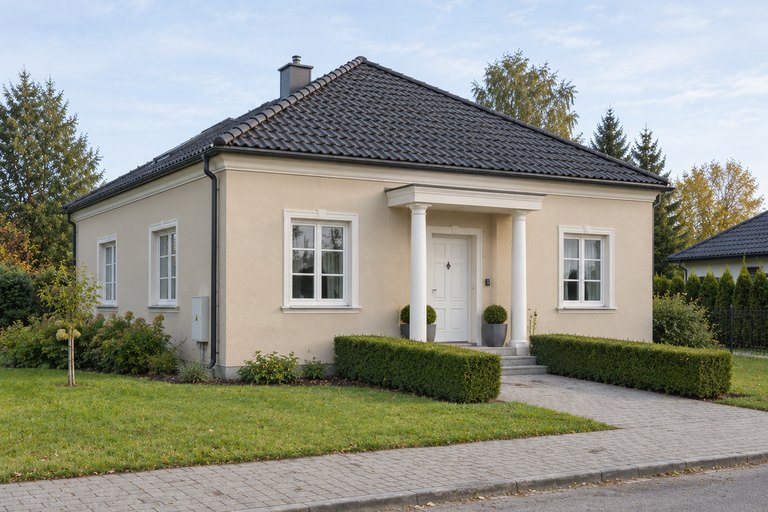
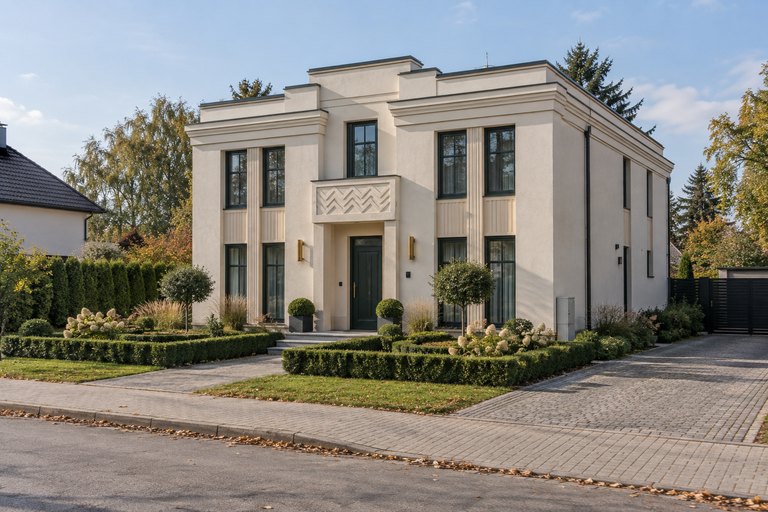
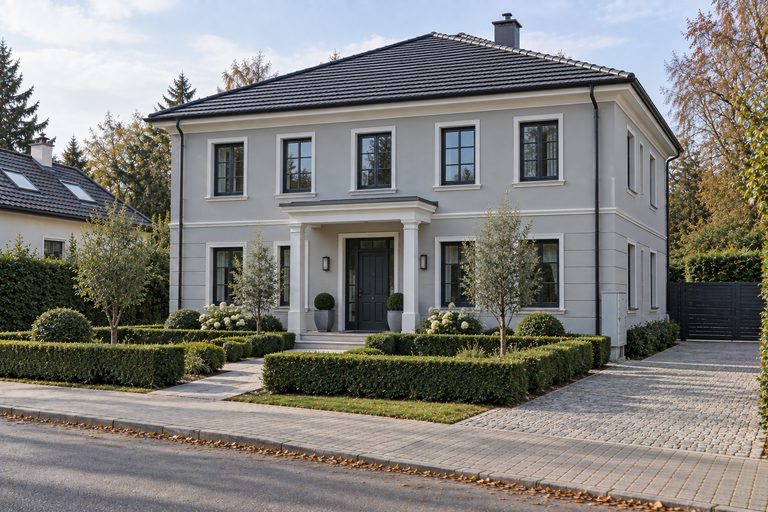
The classical style is a timeless facade: a symmetrical window layout, a muted warm palette and carefully chosen detail — profiled window surrounds, cornices, sometimes rustication on the ground floor. Instead of a wow effect it offers harmony and proportion, which age well.
The palette is calm: beiges, creams, sand and pale brown renders, set off by white architectural detail and joinery in warm brown or graphite. The roof is usually in shades of brick red or brown, which echoes the warmth of the walls.
It is a good choice for houses with traditional massing and a gable or multi-pitched roof, and for buildings you want to dignify without changing their character outright. Picking the right beige and detail colour is hard from samples — on a visualisation of your own house you see immediately whether the facade reads warm or simply bland.
Which houses it suits
- Houses with symmetrical massing and a pitched roof
- Buildings that want an elegant, traditional character
- Neighbourhoods with a consistent, muted look
Colours and materials
- Beiges, creams and sand shades
- White on details and surrounds
- Brick-red or brown roof
Common questions
How does the classical style differ from the Polish manor style?
Classical is more universal and more urban; the manor style leans harder on Polish tradition (columns, a porch, a tall roof). Both rely on symmetry and a muted palette.
Do classical details require rebuilding?
No. Most of the effect comes from render profiles, window surrounds and a shallow cornice, which are added during a facade renovation. A visualisation shows how much the detail alone changes the building.
Similar styles